Beijing Zhongcheng Meijing Cultural and Creative Group Co., Ltd.
Project Discribe
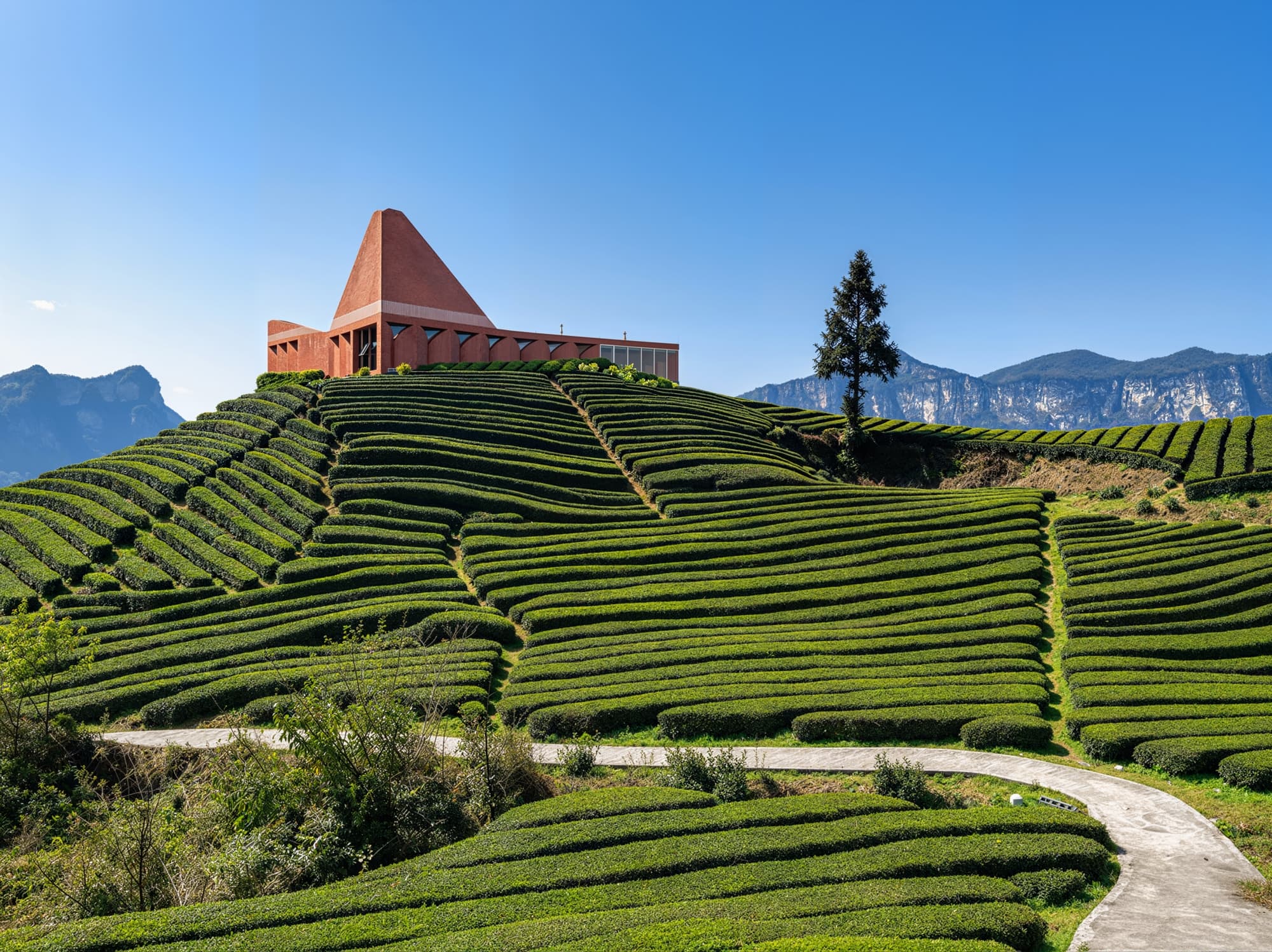
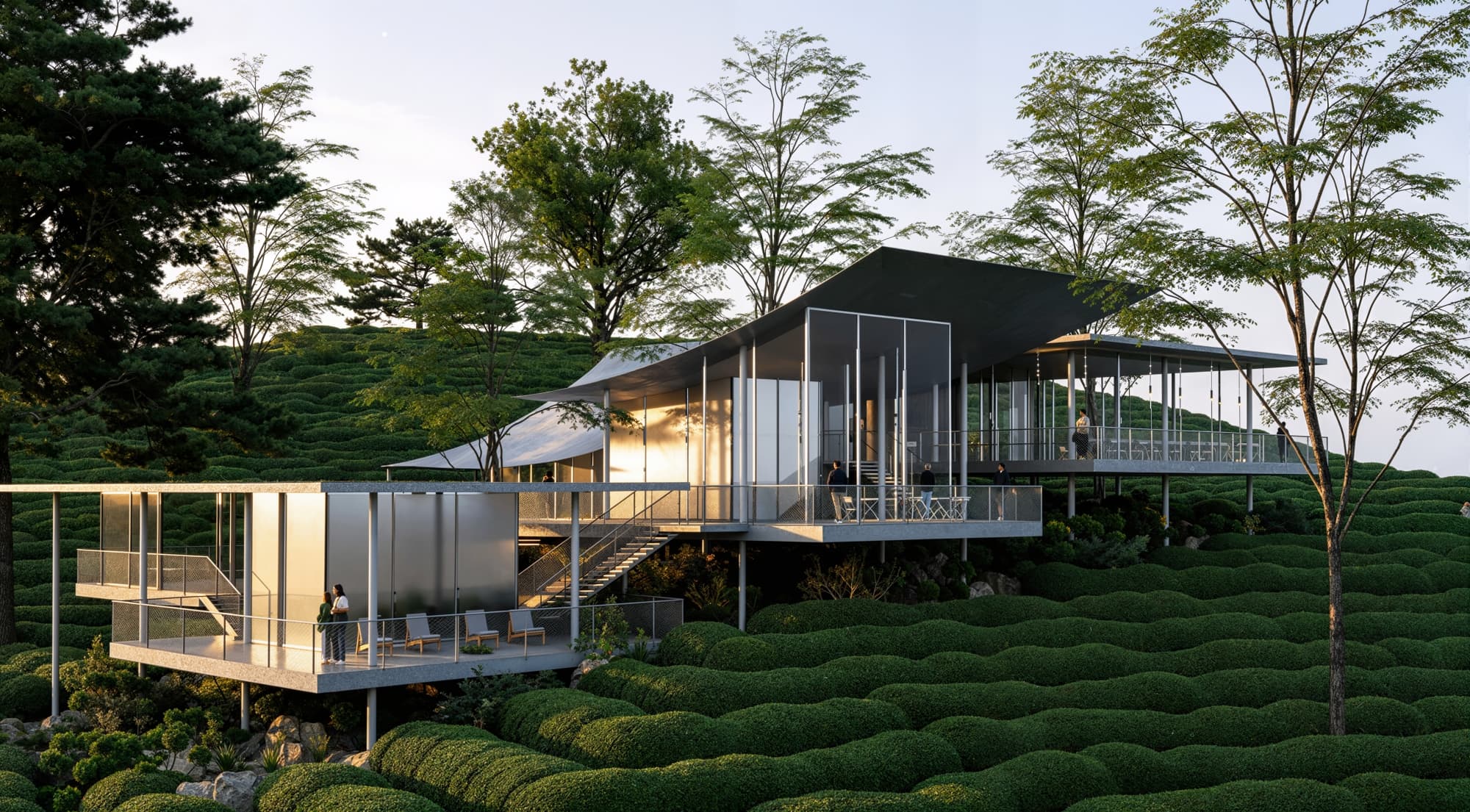
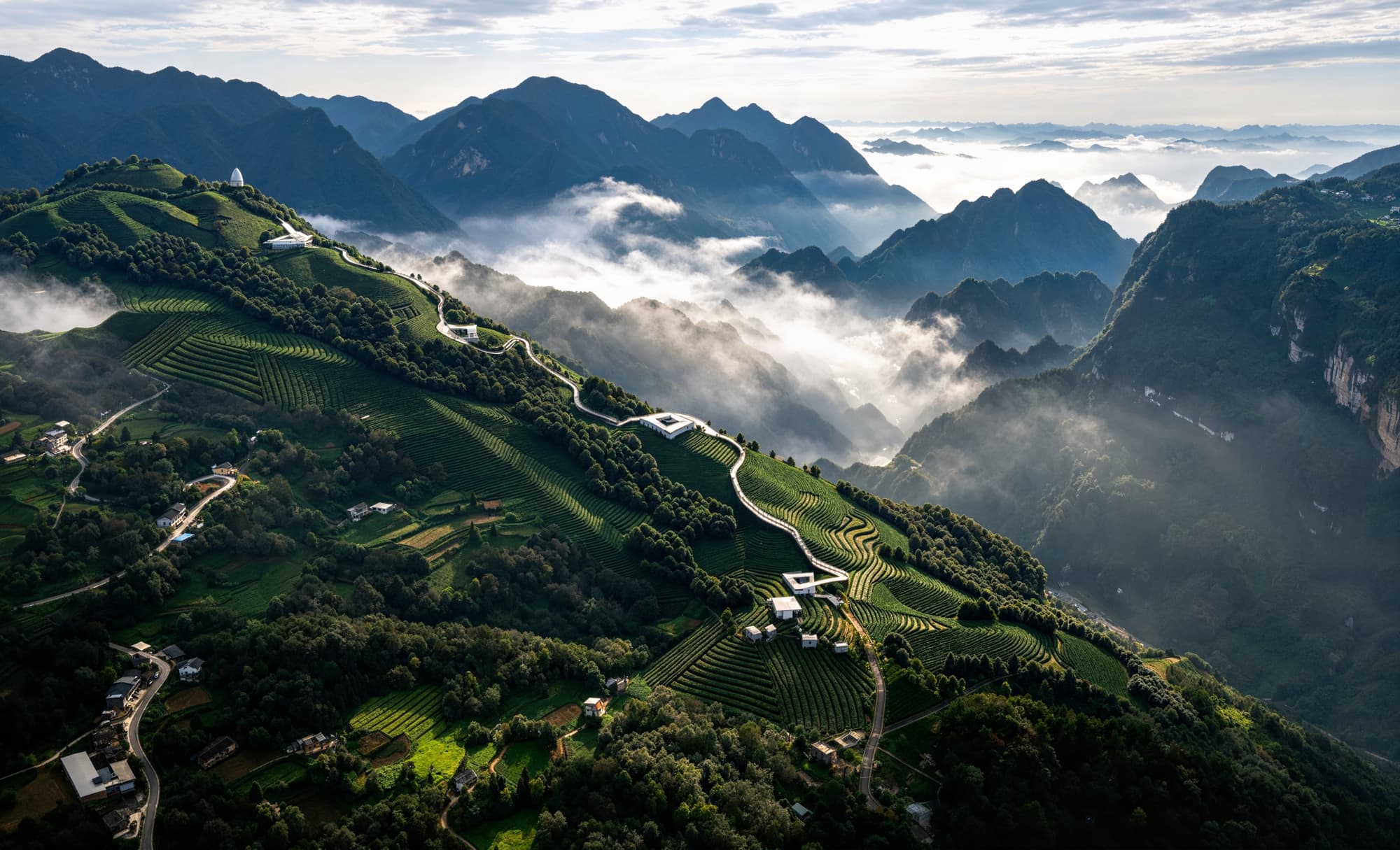
“Cloud Yulu” — the Taozibao Tea Plantation Cultural Tourism Project sits in Tunbao Township, Enshi City, Hubei, on the only route between Enshi down-town and the Enshi Grand Canyon. Cliffs, a sea of clouds and terraced tea fields compose a landscape found nowhere else. Taking the heritage of Enshi Yulu — one of China’s few surviving steamed green teas — as its narrative thread, the project weaves tea culture, tea industry and tea technology into the revitalisation of an ethnic-minority region, positioning itself as a must-stop on the Grand Canyon route, a landmark of Hubei tourism and an immersive destination for Chinese tea culture. The master plan covers about 900 mu (red line 629,506 m²), with Phase I delivering 9,448 m² of built area and 36,673 m² of landscape.
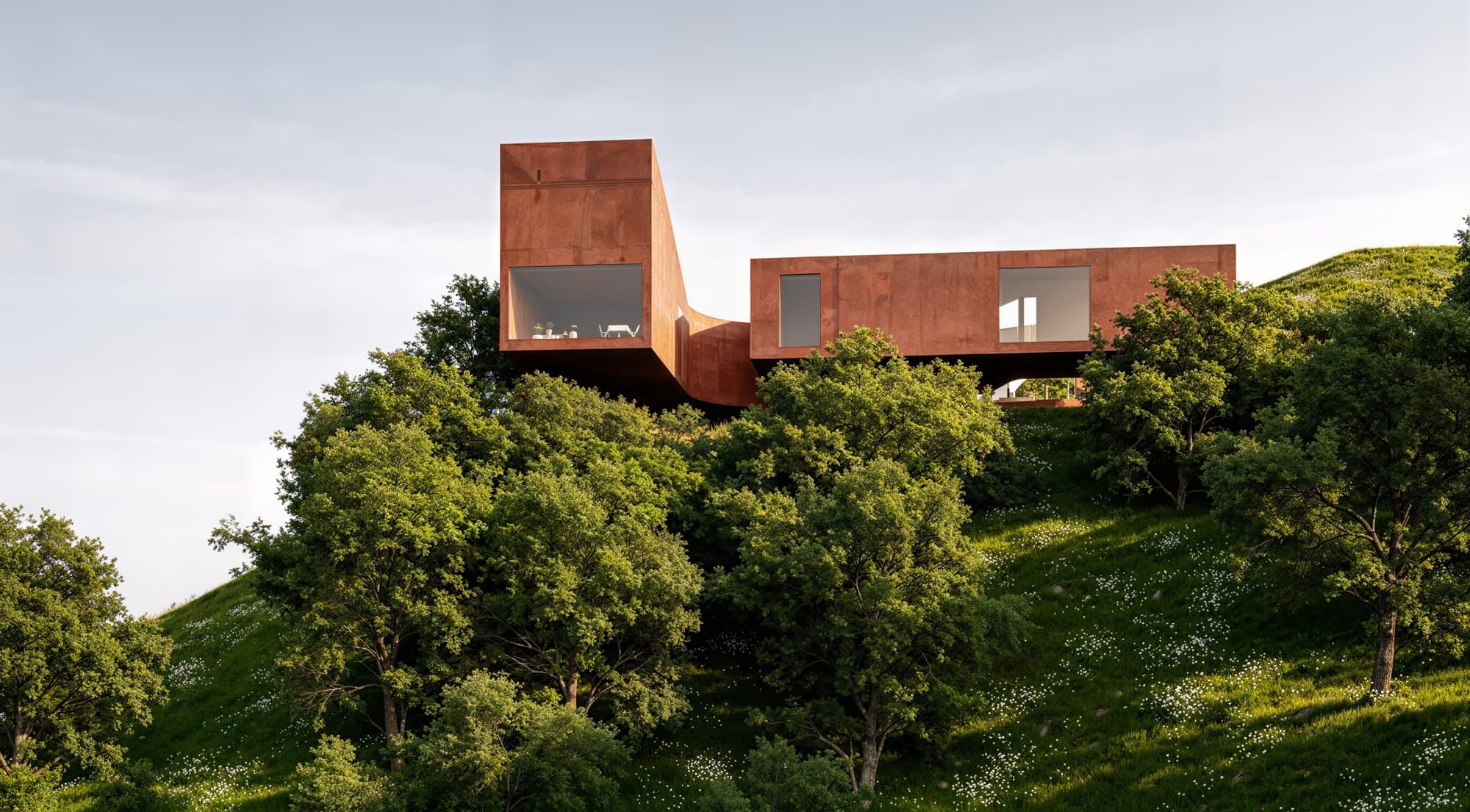
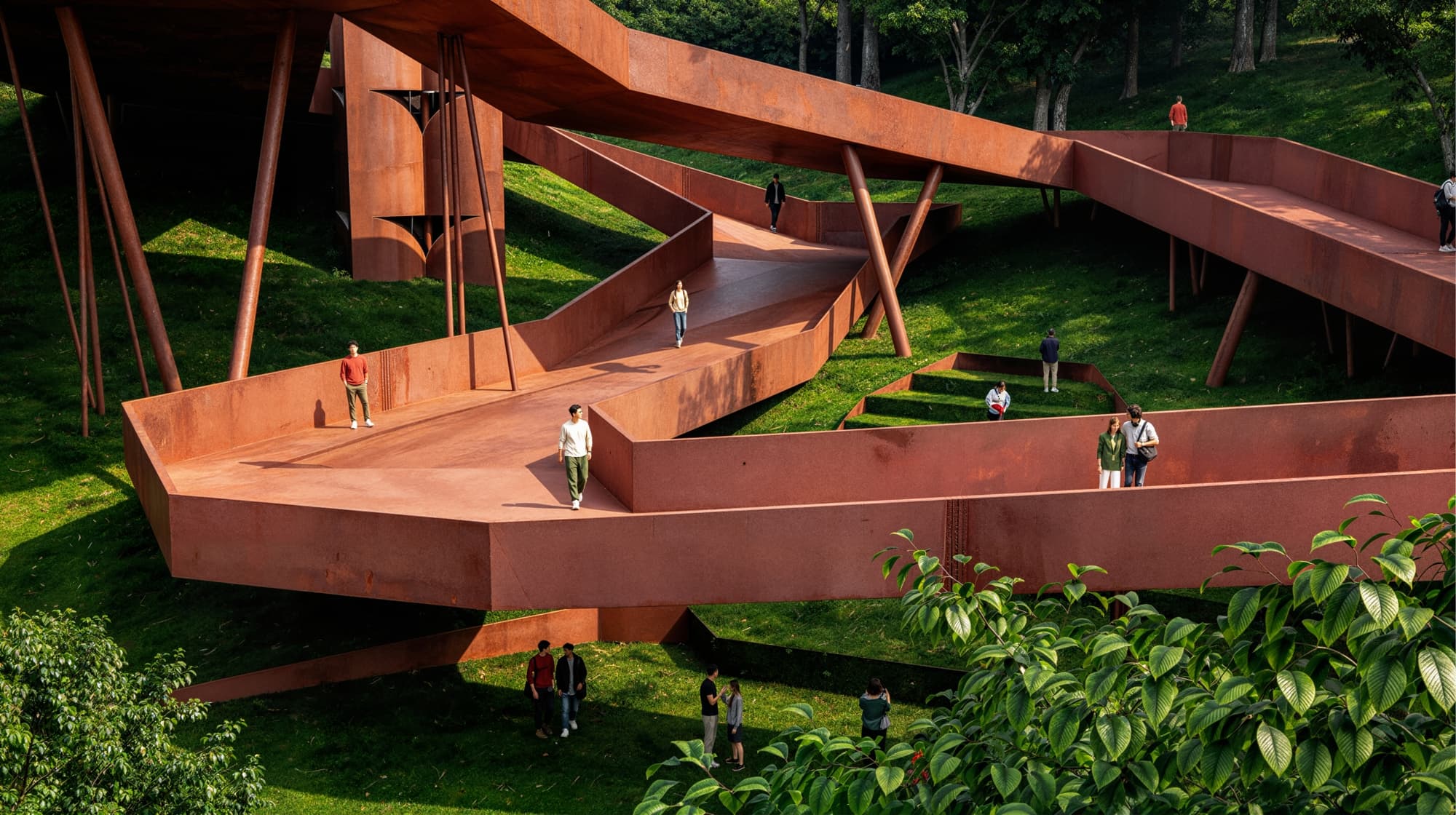
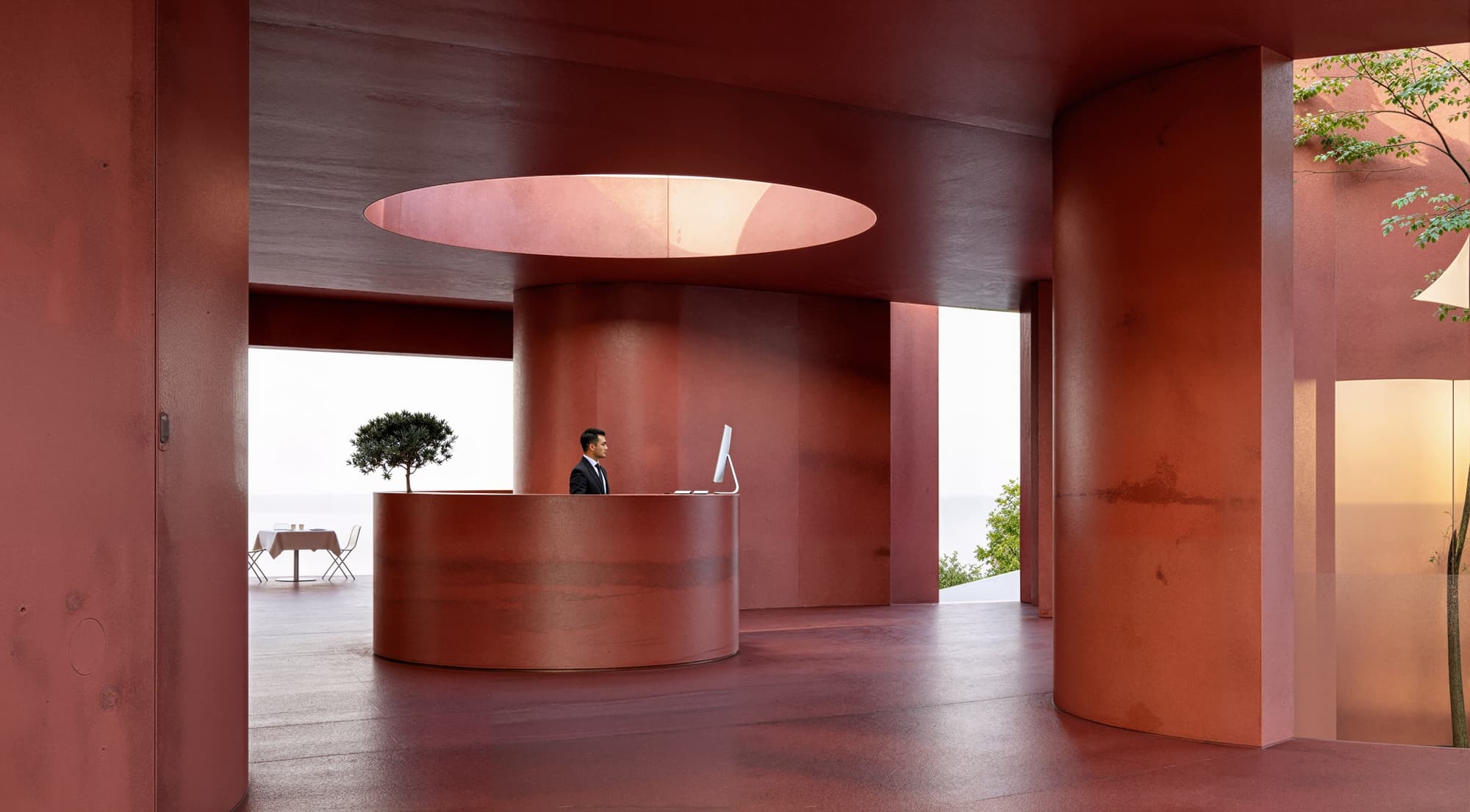
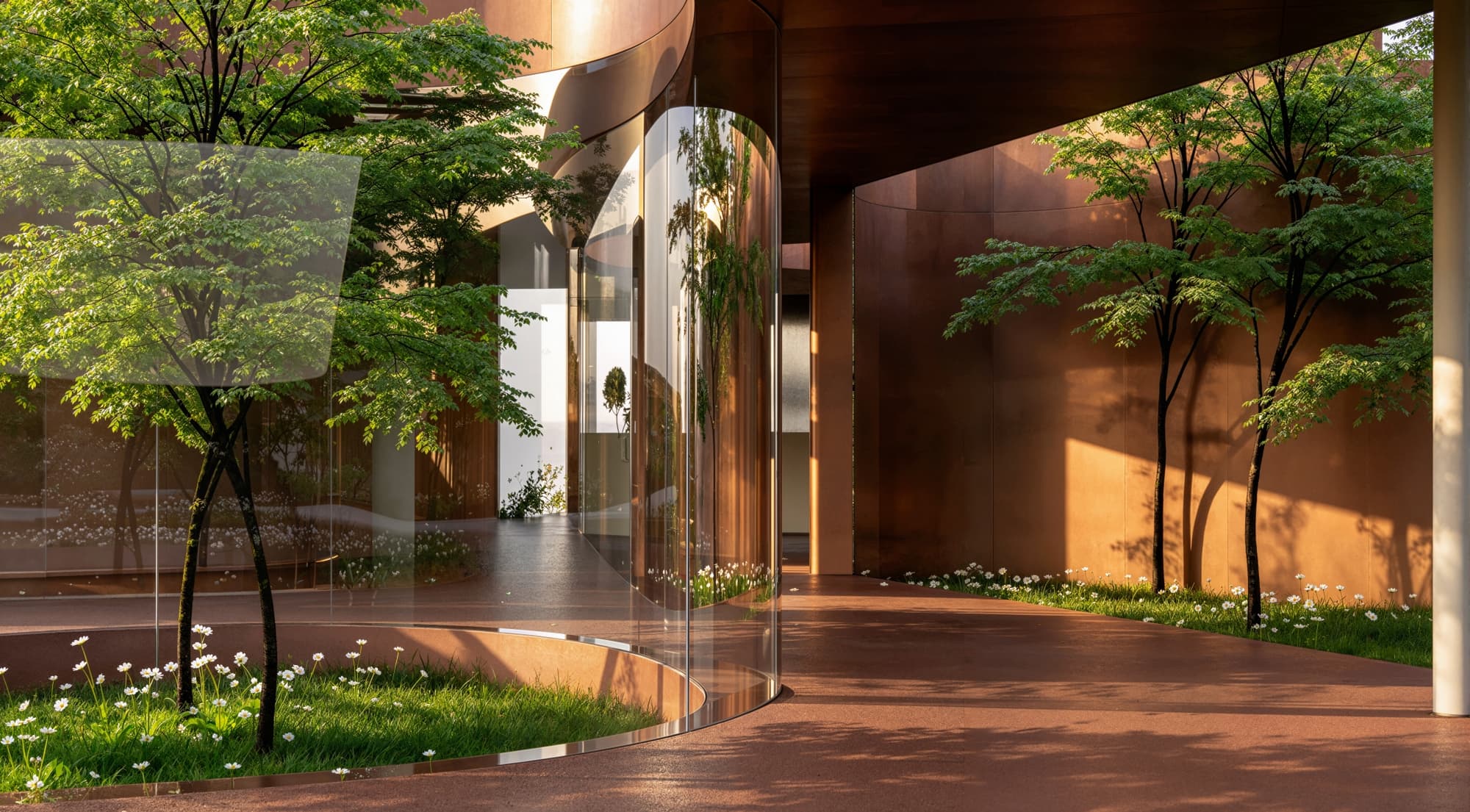
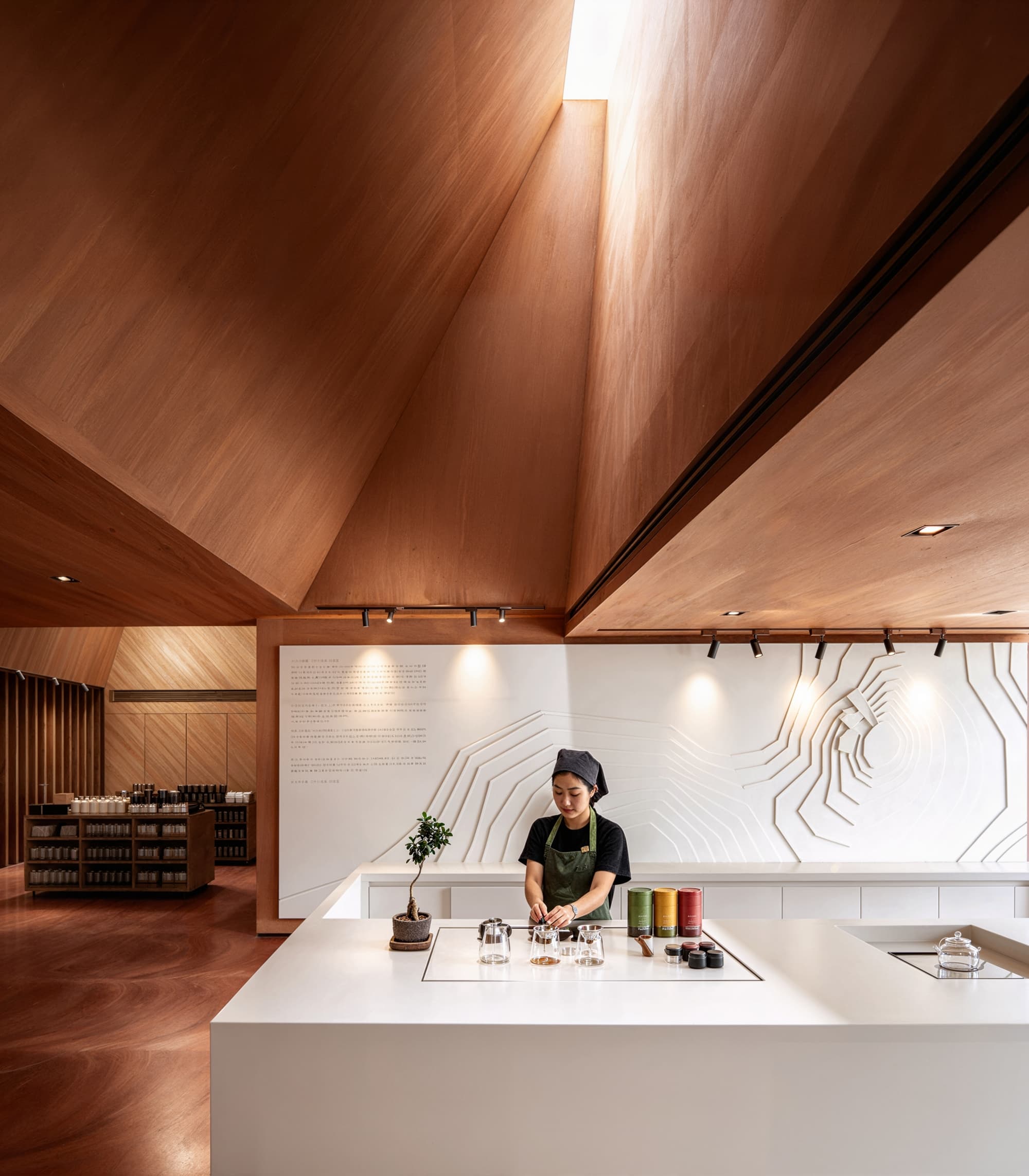
The design follows one rule: follow the mountain, become a gallery where it meets the ground, a bridge where it crosses a valley, and a pavilion where it turns. Across karst gorge terrain ranging from 833 to 1,038 metres, a one-kilometre “Cloud Art Tea Gallery” strings together five cultural buildings — Yulu Post (Visitor Centre), Why Yulu (Tea Museum), Half a Cup of Green (Yulu Tea Room), Listening to the Pine Wind (Tea Show Theatre) and Rosy-Cloud Moun-tain House (Sunset Restaurant) — while more than thirty experience nodes build a progressive sequence of “Road of Tea Origin – Garden of Tea Mountain – Courtyard of Tea”, supporting half-day, full-day and multi-day itineraries. The gallery is at once structure and landscape, fused with mountain, tea field and mist like a ribbon left behind by the Salt-Water Goddess.
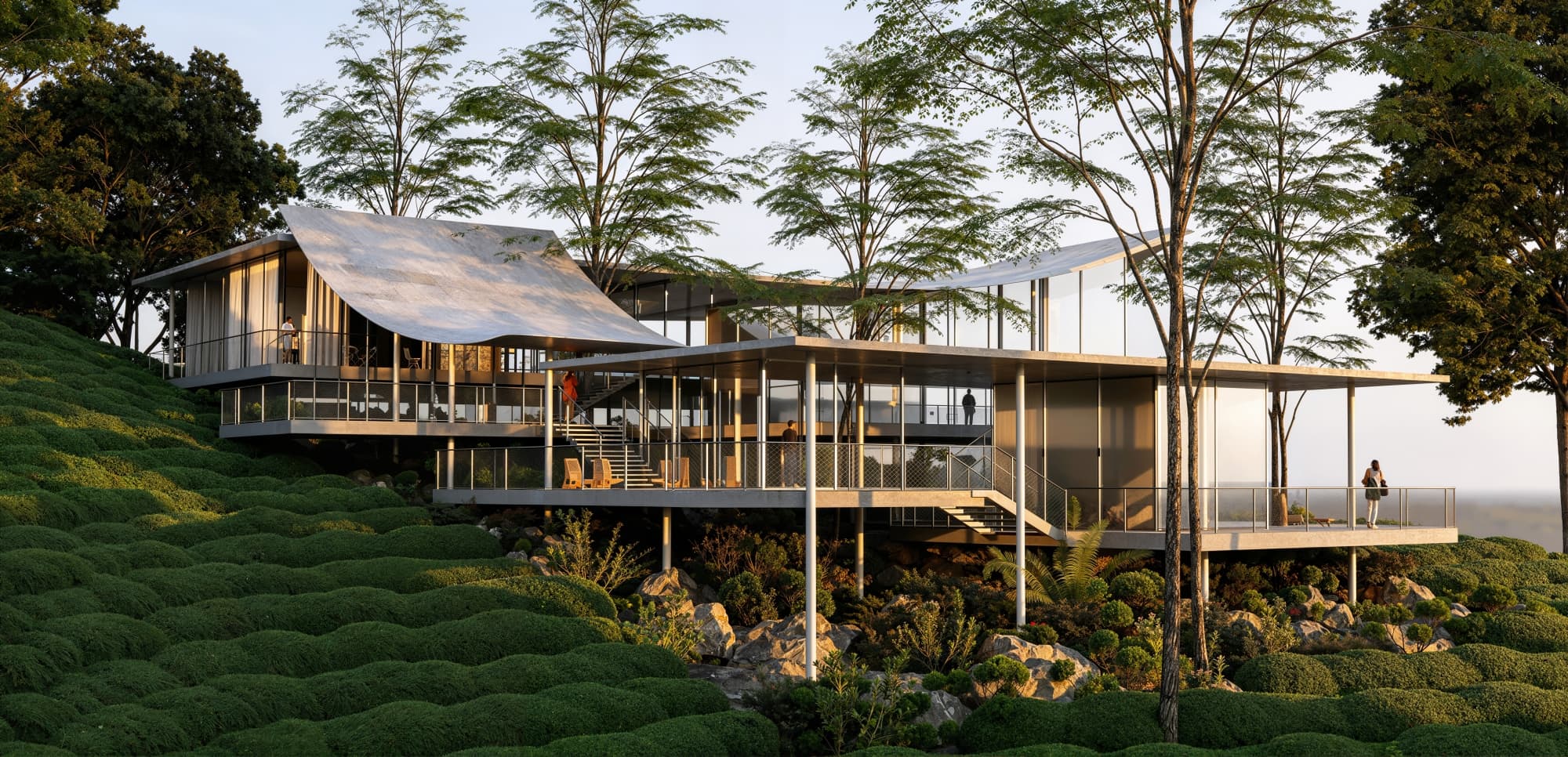
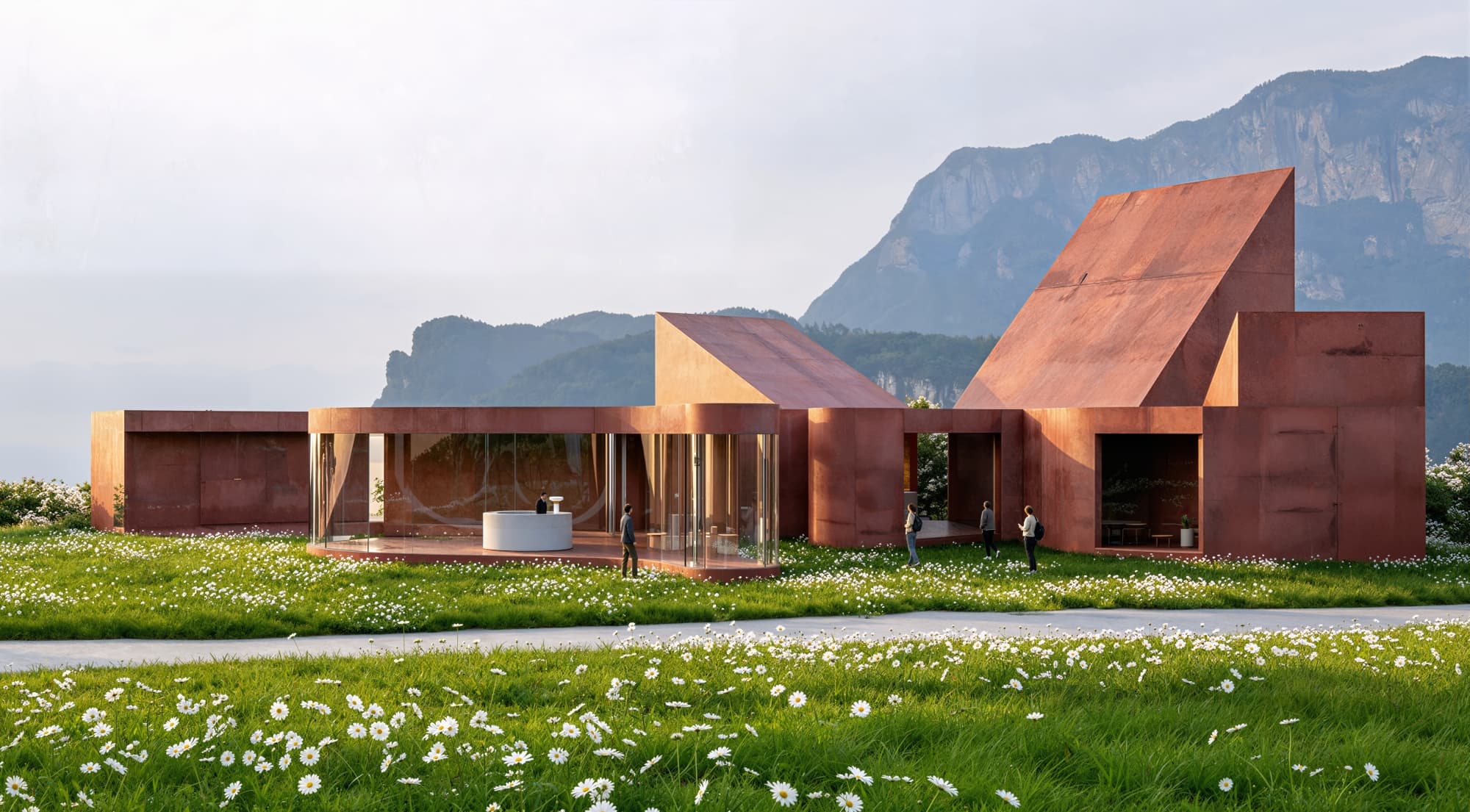
The five buildings are cast in fair-faced concrete and organised as courtyard plus gallery, opening wide to the tea fields and cliffs. The resort area comprises a reception centre and forty standalone cabins in three typologies (40 / 65 / 100 m²), raised on stilts in the local diaojiaolou tradition, with floor slabs perforated to preserve existing trees and elevated walkways for access; prefabricated components are assembled on site to minimise excavation and protect the tea terraces and native vegetation. By intervening minimally in a fragile mountain ecology and yielding architecture to the scenery, the project lets visitors meet nature on foot and offers an immersive experience — “viewing the mountains inside the gallery and outside it, sitting above a sea of clouds, the mind as clear as tea”.